Archive for 'Census' Category
Allowed deer hunting for the first time since 1995. 2 local hunters spent 2 days (11th and 12th) and shot 4 deer:
- 3 year old doe - 100 pounds
- 1 year old doe - 70 pounds
- 2 year old doe - 90 pounds
- 1 year old doe - 70 pounds
Posted in
2008 Journal, Census
Hunting begins. Shot:
- 3 1/2 year old male 8 point antler - 120 pounds
Posted in
2007 Journal, Census
- No raccoons. Not many birds. Very dry.
- Found dead mouse on steps at house. It is a mystery about how it died. There was no blood and it had not been eaten.
- Droppings imply evidence of feral hogs. Later study revealed the droppings were from a large older deer.
- Collected mulch from Oak Wilt project and used on driveway
- Watered new plantings
Tractor work:
- Took loose rocks from the road to infill eroded road on the south side
- Brought dirt from old pile near barn to fill new garden bed in tipi pasture that had been caliche bare spot for years. Added Natural Gardener amendment. Planted 1 pound deer resistant seed mix (from Native American Seed)
Caretaker's note: Although the plants in this seed mix are mostly deer resistant, it was noticed that the seedlings do get severly browsed and so this area will need to be caged for best results until plants reach maturity.
Posted in
2007 Journal, Census, Habitat
- Watered all new plantings
- Removed Johnson grass
- Mowed trail and access to feeding area
- Relocated 7 Leopard frogs from pond near house to river
- Saw black snake with yellow stripe down the length of its back
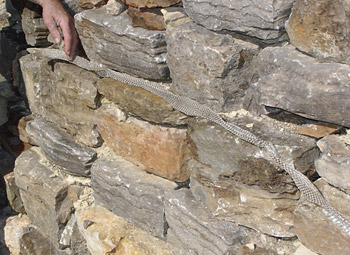
- Found snake skin
Posted in
2007 Journal, Census, Habitat
<< Previous Entries